
A film by Tizza Covi , Rainer Frimmel
With: Alois Koch, Brigitte Meduna
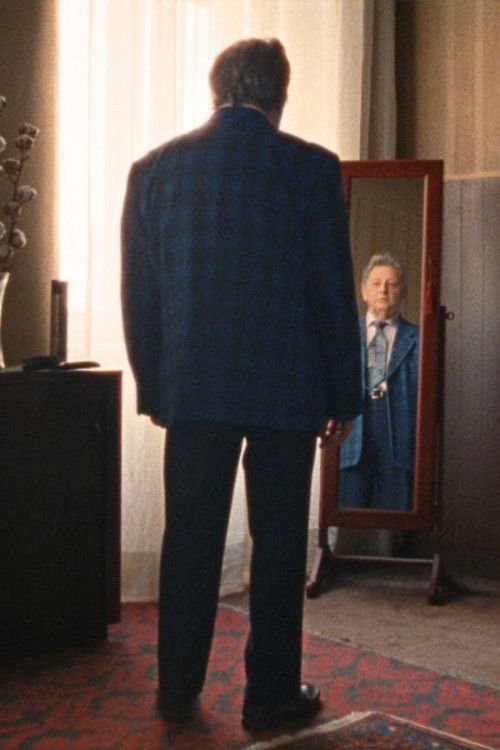
Blues musician Al Cook lives in an apartment filled with memories. Outside, the world carries on without him. But when his home is slated for demolition, out of the ruins of his existence, a long-forgotten dream suddenly resurfaces.
Our rate : ★★★
Drawing heavily on a character, his identity, and his personal history, brilliantly playing with the possibilities of fiction when it is closest to reality, when it draws its nature from documentary, it poetically and diligently reconstructs an entire universe, sublimating it somewhat. The Loneliest Man in Town by Tizza Covi and Rainer Frimmel captivates us from the very first shots with its calm, assertive, benevolent gaze. We are alongside Al Cook (Alois Koch), not at a distance from him, but close to his world, entirely devoted to the blues, with consistency and erudition. The camera follows a character in a fictional story tailored for him, as it is very close to his real story, who he is, his gestures, and his memories. The undertaking is strongly reminiscent of what Aki Kaurismaki did with Little Bob (Le Havre) or the Leningrad Cowboys (Leningrad Cowboys Go America), what Jarmush did with Iggy Pop and Tom Waits (Coffees and Cigarettes), or Paul Auster and Wayne Wang (Smoke, Brooklyn Boogie), paying tribute, through the camera and carefully selected moments chosen for their simplicity, to a local figure, a friend. The Loneliest Man in Town hits the right note, makes objects speak, and conveys the vintage passion that naturally animates Alois Koch, right down to his humor and anecdotes, which are taken straight from his biography. Subtle, elegantly staged, with an atmosphere imbued with the blues so dear to its protagonist, never empty but always refined, the film also appeals in that it adopts a perspective that is neither theoretical nor moralizing, but rock ‘n’ roll without bourgeois considerations, in a Berlin competition where too many films with messages, subjects, or even questions, or focusing on a population that seems out of this world (the bourgeois gaze) in the most often exaggerated—even falsely provocative—forms, have found a place.





Be First to Comment